
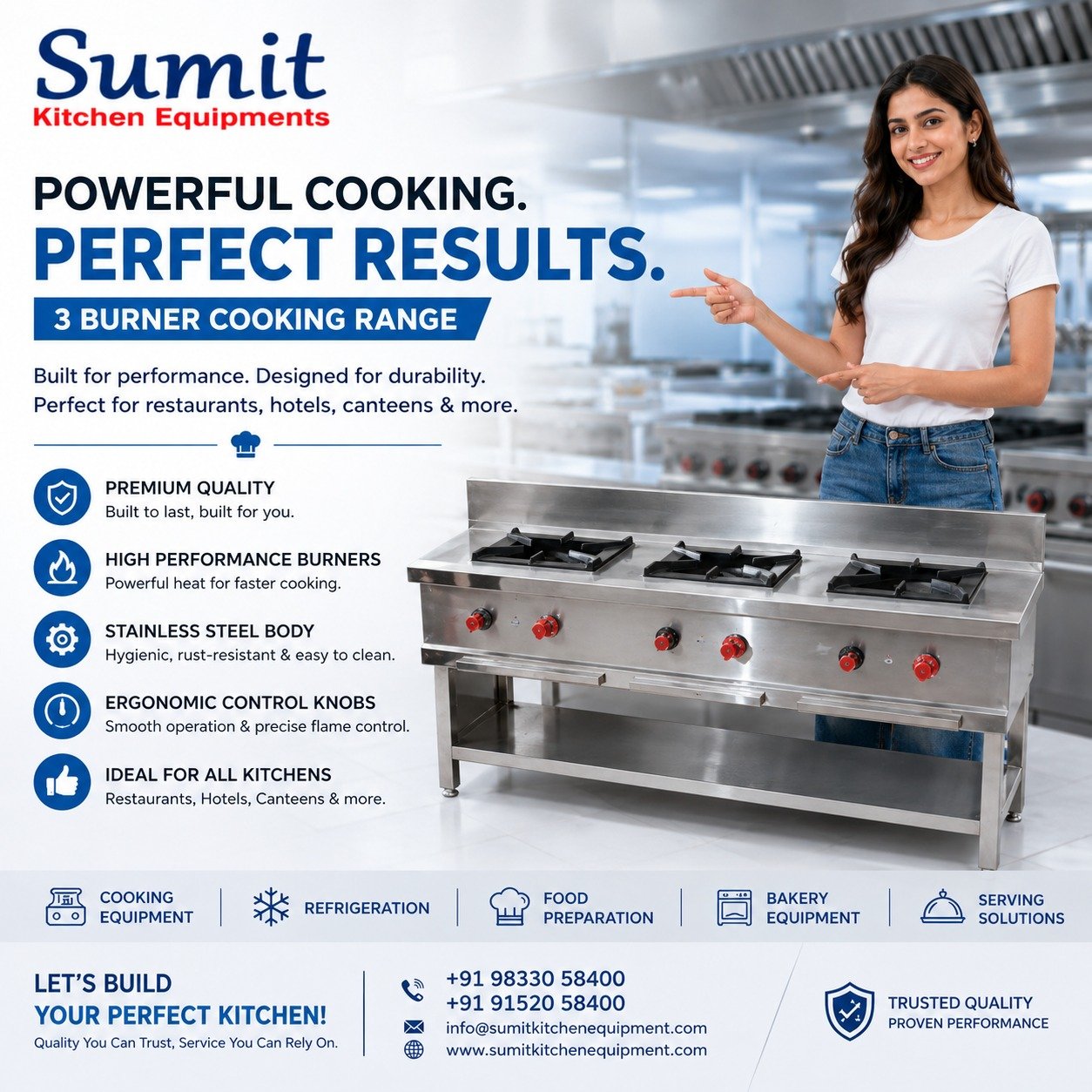
How to Set Up the Perfect Commercial Kitchen: A Complete Equipment Guide
Setting up a commercial kitchen — whether for a restaurant, hotel, canteen, cloud kitchen, or catering business — is one of the most critical investments you will ever make. The right equipment doesn’t just make your kitchen run smoothly; it directly affects food quality, staff efficiency, hygiene standards, and ultimately your bottom line. Yet many business owners underestimate how much thought and planning goes into selecting the right commercial kitchen equipment.
This guide walks you through every major category of equipment you need to consider when building or upgrading a commercial kitchen, what to look for when buying, and how the right choices can transform your food business.
Why the Right Commercial Kitchen Equipment Matters
Professional kitchens operate under very different conditions than home kitchens. Equipment runs for 10 to 16 hours a day, handles much larger volumes, and must meet food safety and hygiene regulations. A cheap or poorly designed appliance may seem like a bargain upfront but quickly becomes a liability — breaking down during peak service hours, failing hygiene inspections, or simply being too slow for commercial demands.
The golden rule for any commercial kitchen is this: invest in durability, performance, and hygiene from the start. Stainless steel construction, high-performance burners, and ergonomic design are not luxury features — they are necessities.
1. The Cooking Range: The Heart of Every Commercial Kitchen
No piece of equipment defines a professional kitchen more than the cooking range. It is where everything happens — from sautéing and boiling to frying and simmering. When choosing a cooking range for commercial use, you need to consider the number of burners, BTU output, material quality, and ease of cleaning.
A 3-burner or 4-burner cooking range with high-performance brass burners is ideal for mid-sized restaurants and canteens. These offer powerful heat output for faster cooking times, a stainless steel body that resists rust and is easy to wipe down, and ergonomic control knobs for precise flame adjustment.
For larger operations — hotels, hospital kitchens, or banquet facilities — you might need specialty equipment like a Chinese Range, which delivers extremely high heat ideal for wok cooking, or a Bulk Cooker for preparing large quantities of rice, dal, or curries in one go.
Other important additions in this category include:
- Boiler — Essential for kitchens that prepare large quantities of soups, stocks, or beverages.
- Chapati Plate with Puffer — A must-have for any Indian kitchen serving rotis at scale.
- Dosa Plate and Dosa Plate Table Top — Perfect for South Indian restaurants or breakfast counters.
You can explore the full Cooking Range category to find the right configuration for your kitchen’s size and cuisine type.
2. Food Preparation Equipment: Speed and Consistency Start Here
Before anything goes on the fire, it has to be prepped. Food preparation equipment covers everything from cutting and grinding to mixing and shaping. In a high-volume commercial kitchen, this category of equipment can save hours of labour every single day.
Key items to consider include:
- Pulverisers and grinders for grinding spices, grains, and wet ingredients at scale.
- Mixers and slicers for consistent chopping and blending.
- Work tables and racks that give your staff a hygienic, well-organised workspace.
When selecting preparation equipment, prioritise units with stainless steel surfaces and components that are easy to disassemble for cleaning. Hygiene at the prep stage is as important as at the cooking stage.
Browse the full range of Preparation Equipments to see what suits your specific kitchen workflow.
3. Cold Equipments: Keeping Ingredients Fresh and Safe
Refrigeration is non-negotiable in any food business. Improper cold storage is one of the leading causes of food spoilage and foodborne illness — two things that can destroy a restaurant’s reputation overnight.
Commercial cold equipment is very different from household refrigerators. They are built for constant use, designed to maintain precise temperatures even when opened frequently throughout the day, and constructed with hygienic, easy-to-clean interiors.
When shopping for cold storage, look for:
- Double-walled, puff-insulated construction for superior temperature retention and energy efficiency.
- All-stainless-steel body for hygiene and durability.
- Multiple door configurations — two-door, three-door, or four-door units depending on your storage volume.
Whether you run a restaurant, a bakery, or a catering operation, having adequate cold storage prevents waste, ensures ingredient quality, and keeps you compliant with food safety standards. Explore the complete Cold Equipments range to find the right unit for your business.
4. Counters: Where Presentation Meets Functionality
A counter is far more than just a surface. In a commercial food environment, the right counter determines how efficiently your staff works, how attractive your setup looks to customers, and how hygienic your food service is.
There are several types of counters, each serving a distinct purpose:
Display Counters
These are used in sweet shops, bakeries, live restaurants, and café setups. A good display counter showcases your product attractively — with glass panels, internal lighting, and temperature control options for items that need to be kept cool. Display Counters are an investment in both presentation and sales.
Catering Counters
Designed for parties, weddings, and large functions, Catering Counters combine stainless steel durability with elegant design. They keep food at the right temperature while making buffet service smooth and professional.
Bar Counters
For restaurants and hotels with beverage service, a well-designed Bar Counter is essential. It needs to handle spills, support heavy equipment like juicers and blenders, and still look sharp for the customer.
Casual Counters
For everyday kitchen use — storage, prep, and service — Casual Counters offer practical, cost-effective solutions without compromising on quality.
The full Counters category offers over 40 products across these sub-categories, giving you complete flexibility to build the front and back of your kitchen exactly as you envision.
5. Service Equipment: The Final Mile of Food Delivery
From the moment food leaves the kitchen to the moment it reaches the customer’s table, service equipment plays a critical role. Insulated trolleys, bain-marie units, chafing dishes, and service trays all help maintain food quality during the delivery and serving phase.
In busy hotels and banquet kitchens, poorly designed service equipment can mean food arriving at the wrong temperature — cold when it should be hot, or warm when it should be chilled. This directly affects customer satisfaction.
Look for service equipment with:
- Good insulation to maintain temperature
- Smooth-rolling wheels or handles for easy mobility
- Stainless steel surfaces for hygiene and easy cleaning
Browse the Service Equipments range to find trolleys, counters, and accessories that match your service style.
6. Washing Equipment: Hygiene Behind the Scenes
A commercial kitchen generates an enormous amount of dirty cookware, utensils, crockery, and containers throughout the day. A proper washing station — with the right sinks, racks, and washing units — is essential to keep operations running smoothly and hygienically.
The key considerations when setting up your wash area:
- Size and capacity — Do you have enough sinks and space for your volume of service?
- Drainage — Proper drainage prevents water pooling, which creates hygiene risks.
- Material — Stainless steel is the industry standard for wash sinks and draining racks.
A well-designed wash area keeps your kitchen compliant with health regulations and reduces the risk of cross-contamination. Explore the Washing Equipments range for sinks, racks, and washing units designed specifically for commercial use.
7. Carts, Kiosks & Ice Cream Parlour Setups: Business Beyond the Kitchen
Not every food business operates from a fixed location. Food carts and kiosks have become one of the most popular formats for street food vendors, mall outlets, and quick-service concepts — offering low overhead with high visibility.
A well-designed food cart or kiosk needs to be:
- Compact yet functional — with enough surface and storage space for smooth operation
- Mobile — easy to move and set up in different locations
- Visually attractive — because in a mall or street setting, appearance drives footfall
The Carts & Kiosk range covers multiple configurations, from simple push carts to enclosed kiosk units — perfect for startups and established brands looking to expand their format.
For those setting up a dessert business, the Ice Cream Parlour setups offer everything you need — from display freezers and serving counters to complete parlour furniture arrangements. These setups are popular in Tier 2 and Tier 3 cities where dessert cafés are rapidly growing.
8. Imported Equipment: Global Solutions for Every Cuisine
Indian food businesses are increasingly diversifying — Italian, continental, Japanese, and fusion concepts are now common even in smaller cities. Many of these cuisine types require specialised equipment not found in standard domestic ranges.
Imported Equipments bridge this gap — offering professional-grade tools for every type of cuisine preparation. With over 22 products in this category, you can find equipment suited for baking, grilling, steaming, or specialised food processing that your menu demands.
9. Tips for Choosing the Right Supplier
Getting the right equipment is only half the battle. Choosing the right supplier matters just as much. Here is what to look for:
ISO Certification — A manufacturer with ISO 9001 certification follows standardised quality control processes. This is a good indicator of consistent product quality.
After-Sales Service — Commercial kitchen equipment requires regular maintenance. A supplier with strong after-sales support saves you time and money in the long run.
Customisation — Every kitchen is different. A good supplier can customise dimensions, configurations, and materials to fit your specific space and needs.
On-Time Delivery — Kitchen equipment delays can push back your entire opening timeline. Work with suppliers known for reliable delivery schedules.
Competitive Pricing — Quality and affordability don’t have to be opposites. The best manufacturers offer superior products at market-competitive prices without cutting corners on materials.
Final Thoughts
Setting up a commercial kitchen is a major undertaking, but when done right, it becomes the foundation of a successful food business. From powerful cooking ranges and efficient preparation equipment to elegant display counters and hygienic washing stations, every piece of equipment plays a role in your kitchen’s overall performance.
Take the time to plan your kitchen layout, understand your menu requirements, and invest in equipment that will last. Whether you are opening your first restaurant or upgrading an existing operation, the right commercial kitchen setup will pay for itself many times over through efficiency, reduced downtime, and consistent food quality.
To explore the full range of commercial kitchen equipment — from cooking ranges and cold storage to counters, carts, and imported equipment — visit Sumit Kitchen Equipments or send an enquiry to discuss your specific requirements.
Sumit Kitchen Equipments is an ISO 9001:2008 certified manufacturer based in Raipur, Chhattisgarh, supplying stainless steel kitchen equipment to restaurants, hotels, hospitals, canteens, and catering businesses across India.



Leave a Reply