
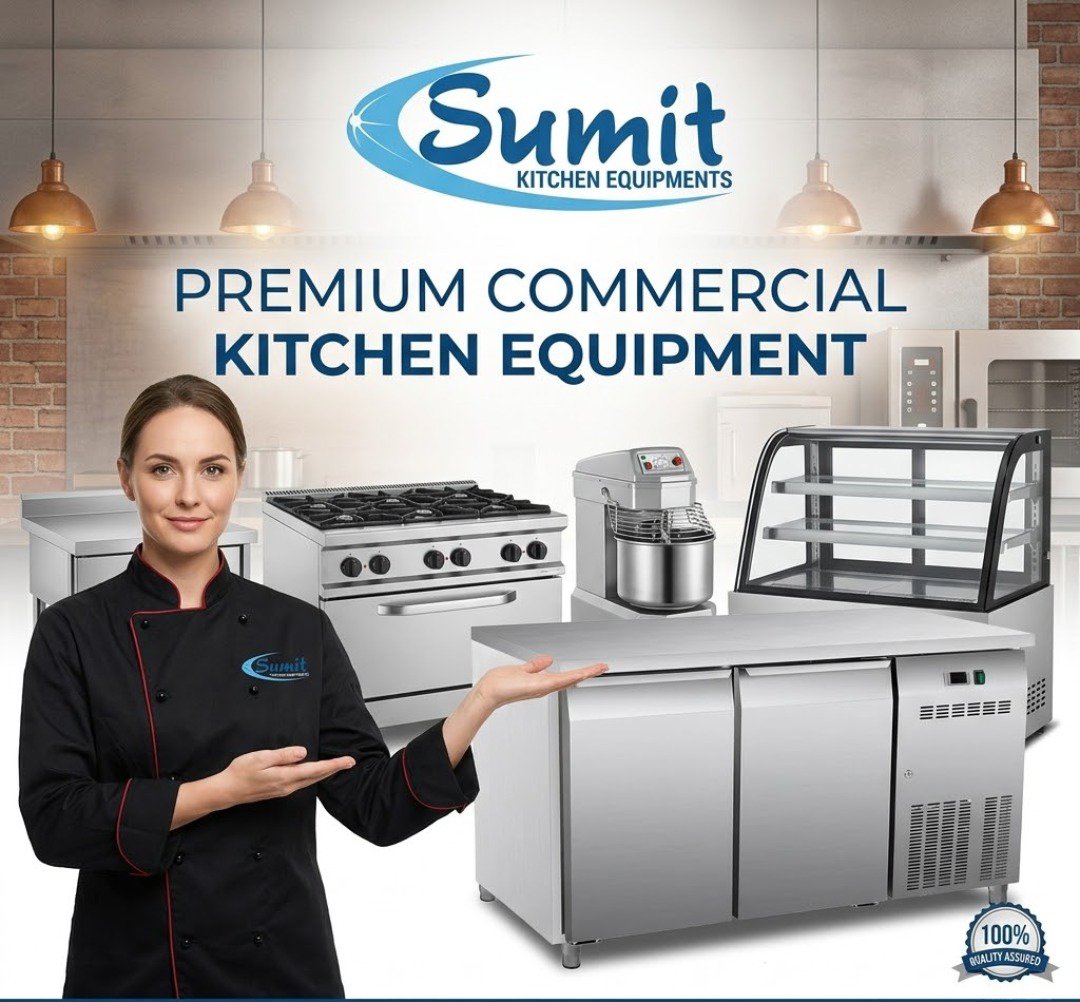
Walk into any well-run restaurant, hotel, or catering operation and you will notice something immediately — everything has its place. The prep area is organised, the service counter is clean and accessible, and the display is attractive enough to influence what customers order. Behind all of this is one often-overlooked element: the right counters.
Counters are the backbone of both the front and back of every commercial food operation. They define your workflow, determine how efficiently your staff works, shape the customer’s first impression, and in many cases, directly influence your sales. Yet counter selection is one of the most underplanned aspects of commercial kitchen and food business setup.
This guide covers every major type of commercial counter — what each one is designed for, what to look for when buying, and how to choose the right combination for your specific business.
Why Counters Matter More Than Most People Realise
Most food business owners spend considerable time thinking about cooking equipment, cold storage, and interiors — and comparatively little time thinking about counters. This is a mistake.
Consider what counters actually do in a food business:
- They define your workspace and workflow — a poorly designed counter layout creates bottlenecks and slows down service
- They are the first thing customers see and interact with — a well-designed display or service counter builds trust and drives orders
- They determine your hygiene standards — counters made from the wrong material harbour bacteria and create compliance issues
- They contribute to the durability and longevity of your setup — quality counters made from proper materials last for years; cheap ones warp, corrode, and need replacing within months
Whether you are setting up a restaurant, a sweet shop, a catering business, or a cloud kitchen, getting your counters right from the start saves you significant time, money, and frustration.
The Main Types of Commercial Counters
Commercial counters fall into several distinct categories, each designed for a specific function. Understanding what each type does — and what it doesn’t do — is the first step to making the right choice.

1. Display Counters
Display counters are used wherever food or products need to be showcased to customers. They are common in sweet shops, bakeries, juice bars, ice cream parlours, live food counters in restaurants, and anywhere a visual presentation of the product influences the buying decision.
A good display counter should:
- Show the product attractively — with glass panels that are clear, easy to clean, and well-lit internally
- Maintain the right temperature — for products that need to be kept cool (sweets, pastries, ice creams), a refrigerated or chilled display counter is essential
- Be easy to access from the staff side — sliding doors or hinged panels that allow staff to serve quickly without disrupting the display
- Be constructed from stainless steel — for hygiene, durability, and a professional appearance
Display counters are not just a storage solution — they are a sales tool. Research consistently shows that customers order more when food is presented attractively and visibly. A dark, cluttered, or poorly maintained display counter suppresses sales. A clean, well-lit, attractively arranged display counter drives them.
Explore the Display Counters range to find units in various sizes and configurations suited to your product type and space.

2. Catering Counters
Catering counters are designed for a very specific environment — events, weddings, corporate functions, and large-scale food service where food must be kept at the right temperature while being served to large numbers of people over an extended period.
A professional catering counter typically includes:
- Bain-marie inserts — to keep hot food at serving temperature without drying out
- Cold sections — for salads, desserts, and chilled items
- Stainless steel construction throughout — for hygiene, easy cleaning, and professional appearance
- Portable or modular design — so units can be transported to event venues and assembled on-site
For catering businesses, the quality of your counter setup directly reflects on your professionalism. Clients and event hosts notice the difference between a well-equipped, well-presented catering setup and a makeshift arrangement. A quality catering counter also makes your staff’s job significantly easier during the high-pressure environment of live event service.
The Catering Counters range covers various sizes and configurations designed for different event scales — from small corporate lunches to large wedding receptions.
3. Bar Counters
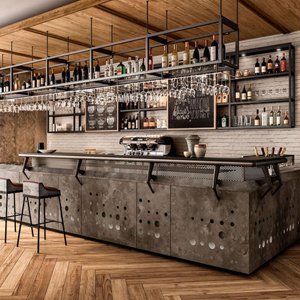
A bar counter serves a unique dual function — it is a workspace for your staff and a focal point for your customers simultaneously. In restaurants, hotels, lounges, and cafés with beverage service, the bar counter sets the tone for the entire customer experience.
A well-designed bar counter needs to:
- Support heavy equipment — blenders, juicers, espresso machines, and ice crushers all create vibration and weight that the counter must handle without flexing or warping
- Handle spills efficiently — built-in drainage channels and easy-to-clean surfaces are essential in a bar environment where liquid spills are constant
- Look professional — since bar counters are highly visible to customers, the finish, design, and condition of your bar counter directly affects your brand perception
- Provide adequate storage — for bottles, glasses, garnishes, and tools within easy reach of the bartender or beverage staff
The height and depth of a bar counter also matter for ergonomics — both for the staff working behind it and the customers sitting or standing on the other side.
Explore Bar Counter options designed specifically for commercial food and beverage environments.

4. Casual Counters
Casual counters are the workhorses of the back-of-house kitchen. They don’t face customers and they don’t need to look beautiful — but they need to be functional, durable, and hygienic.
In a commercial kitchen, casual counters serve as:
- Prep surfaces — where vegetables are chopped, dough is prepared, and ingredients are portioned
- Pass-through stations — where prepared dishes are plated and staged before going to the service area
- Storage platforms — for kitchen equipment, containers, and supplies that need to be within arm’s reach during service
When choosing casual counters for your kitchen, the key specifications are:
- Stainless steel surface — grade 304 stainless steel is the industry standard for kitchen prep surfaces. It is non-reactive, easy to sanitise, and durable enough for heavy daily use
- Adequate thickness — thinner steel surfaces dent and warp under the weight of heavy pots and equipment. Look for counters with reinforced frames and adequately thick worktops
- Under-shelf storage — a lower shelf for storing pots, containers, or equipment maximises your kitchen’s storage efficiency
- Adjustable feet — commercial kitchen floors are rarely perfectly level. Adjustable feet allow you to level your counter properly and prevent rocking
Browse the Casual Counters range for practical, durable options across various sizes.

5. Counter, Carts & Kiosks
For food businesses that operate in non-traditional spaces — malls, markets, events, food courts, and street locations — a fixed counter is often not practical or affordable. This is where mobile counter solutions, carts, and kiosks come in.
A well-designed food cart or kiosk combines the functionality of a counter with the flexibility of mobility. The best units offer:
- Integrated storage — for ingredients, packaging, and equipment
- Built-in cooking or cold elements — depending on the product being served
- Attractive exterior design — since carts and kiosks operate in high-visibility locations, appearance directly influences footfall
- Durable, weather-resistant construction — for outdoor or semi-outdoor environments
This format is especially popular for ice cream, beverages, snacks, and fast food concepts. It is also an excellent way for established businesses to expand their reach without the overhead of a full second outlet.
The Counter, Carts & Kiosks category offers 19 products across various configurations — from simple push carts to fully enclosed kiosk units with integrated equipment.
Material Matters: Why Stainless Steel is the Only Choice for Commercial Counters
When it comes to commercial food environments, stainless steel is not just the preferred material — it is the industry standard for good reason.
Hygiene — Stainless steel is non-porous, meaning bacteria cannot penetrate the surface. It can be sanitised with standard commercial cleaning agents and withstands the high-temperature cleaning that commercial kitchens require.
Durability — A well-made stainless steel counter lasts for decades. It does not warp, crack, or delaminate like wooden or MDF surfaces, and it resists the heat, moisture, and physical impact of daily commercial use.
Food Safety Compliance — FSSAI and most state food safety regulations specify non-porous, easy-to-clean surfaces for food contact areas. Stainless steel meets these requirements without exception.
Professional Appearance — Stainless steel looks professional, clean, and consistent — important for customer-facing areas as well as kitchen environments that may be subject to health inspections.
Grade 304 vs Grade 202 — Not all stainless steel is equal. Grade 304 (also called food-grade stainless steel) contains a higher proportion of nickel and chromium, making it significantly more resistant to corrosion and more hygienic than the cheaper grade 202 commonly used in lower-quality products. Always ask your supplier which grade they use.
How to Plan Your Counter Layout
Before purchasing counters, spend time planning your layout. The goal is to create a workflow that minimises unnecessary movement and maximises efficiency.
For the kitchen (back-of-house):
- Place prep counters close to your cold storage and ingredient storage
- Position pass-through counters between the cooking area and the service area
- Ensure there is adequate aisle space — at least 90cm — between facing counters for staff to move freely during service
For the customer-facing area (front-of-house):
- Position display counters at eye level where possible — products displayed at eye level sell better than those displayed low
- Ensure your service counter allows staff to serve efficiently without reaching awkwardly or turning their backs to customers
- Design your bar or beverage counter so that all commonly used equipment is within arm’s reach of the operator
For catering and events:
- Plan for transport — counters need to fit through standard doorways and into transport vehicles
- Modular setups that can be reconfigured for different event layouts are more versatile than fixed single-piece units
Questions to Ask Before Buying Commercial Counters
Before finalising your counter purchase, run through these questions:
- What is the primary function of this counter — prep, display, service, or storage?
- Will customers see this counter? If yes, aesthetics and finish quality matter more.
- Does this counter need temperature control — heating or cooling?
- What size and configuration fits my available space?
- What grade of stainless steel is used in the construction?
- Can this counter be customised to fit my specific dimensions or requirements?
- Does the supplier offer installation and after-sales support?
Final Thoughts
Counters are one of the most important — and most underappreciated — investments in any commercial food business. The right counter in the right place makes your kitchen faster, your food safer, your staff more productive, and your customer experience better.
Whether you need elegant Display Counters for your sweet shop, robust Catering Counters for your events business, a professional Bar Counter for your restaurant, or practical Casual Counters for your kitchen workspace, the right solution is available for every budget and every business type.
Explore the complete Counters range — over 40 products across all categories — at Sumit Kitchen Equipments, or send an enquiry to discuss your specific requirements with our team.
Sumit Kitchen Equipments is an ISO 9001:2008 certified manufacturer based in Raipur, Chhattisgarh, supplying stainless steel commercial kitchen equipment to restaurants, hotels, sweet shops, catering businesses, and food entrepreneurs across India.



Leave a Reply