
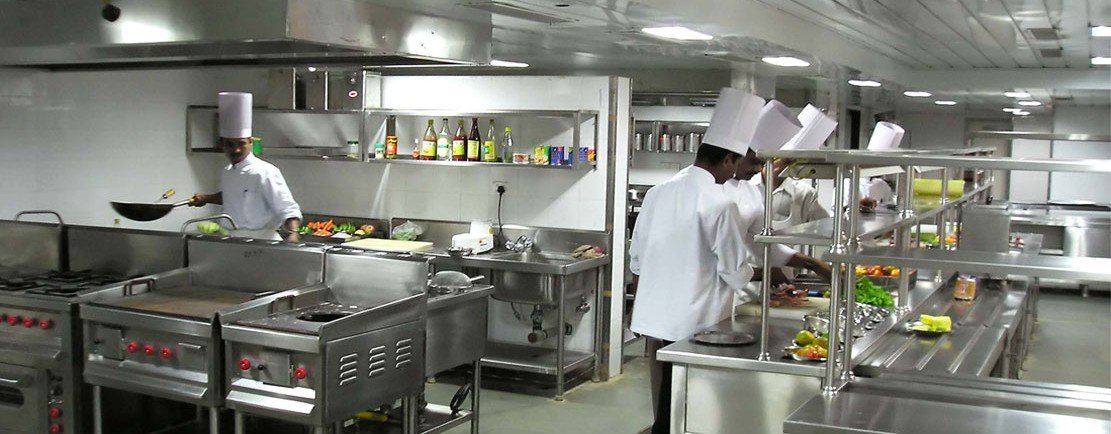
If there is one piece of equipment that defines the heart of a commercial kitchen, it is the cooking range. Everything else — the prep tables, the refrigerators, the washing stations — supports the cooking range. It is where your menu comes to life, where your chefs spend most of their time, and where the quality of your food is ultimately determined.
Yet despite its importance, many restaurant owners choose their cooking range based purely on price or appearance, without fully understanding what their kitchen actually needs. The result is often a range that is underpowered for the volume they serve, difficult to clean, or simply not suited to their cuisine type.
This guide breaks down everything you need to know to make the right decision — from burner count and BTU output to material quality and cuisine-specific requirements.
Why Your Cooking Range Choice Matters More Than You Think
A cooking range in a commercial kitchen operates very differently from one in a home. It runs for 10 to 16 hours a day, handles dozens of simultaneous orders, and must perform consistently under high pressure. An underpowered or poorly built range slows down your kitchen, increases cooking times, frustrates your chefs, and ultimately affects the quality of food that reaches your customers.
On the other hand, a well-chosen commercial cooking range:
- Delivers consistent heat output across every burner, every service
- Reduces cooking time, improving table turnover in restaurants
- Withstands the rigours of daily commercial use without frequent breakdowns
- Is easy to clean and maintain, supporting kitchen hygiene
- Is safe to operate, with reliable flame control and stable construction
The cooking range is not an area to cut corners. It is an investment that pays for itself through efficiency, reliability, and the quality it brings to your food.
Step 1: Understand Your Kitchen’s Volume and Menu
The first question to answer before buying any cooking range is: what and how much are you cooking?
A small café serving 50 covers a day has very different needs from a wedding catering kitchen serving 500 people. Your cuisine type also matters enormously — a South Indian restaurant cooking dosas all day needs different equipment from a Chinese restaurant with wok-heavy cooking.
Ask yourself:
- How many covers do you serve per day, on average and at peak?
- What is your primary cuisine — Indian, Chinese, Continental, South Indian, or multi-cuisine?
- What cooking methods dominate your menu — boiling, frying, sautéing, grilling, or a mix?
- How many chefs will be using the range simultaneously?
The answers to these questions will directly determine how many burners you need, what BTU output is appropriate, and whether you need a standard range or a specialised one.
Step 2: Choose the Right Number of Burners
Burner count is often the first specification people look at, and for good reason — it determines how many dishes you can cook simultaneously.
2-Burner Range — Suitable for very small operations: cloud kitchens with a focused menu, small cafés, or as a secondary range in a larger kitchen. Not recommended as a primary range for any restaurant serving more than 30–40 covers.
3-Burner Range — A popular choice for small to mid-sized restaurants, dhabas, and canteens. Offers flexibility for simultaneous cooking without requiring too much space. Ideal for kitchens where one to two chefs work at the range at a time.
4-Burner Range — The most common configuration for mid-sized restaurants. Allows two chefs to work simultaneously and supports a full menu with multiple cooking processes happening at once.
6-Burner Range and Above — For large restaurants, hotel kitchens, banquet operations, and high-volume catering. These ranges are built for intensity — they run all day, handle massive output, and need to be correspondingly robust in their construction.
Beyond burner count, always check the BTU (British Thermal Unit) rating of each burner. Higher BTU means more heat output and faster cooking. Commercial burners typically range from 10,000 to 25,000 BTU. For Indian cooking — where high-flame techniques like tarka, bhuno, and stir-frying are common — higher BTU output is a significant advantage.
Explore the full Cooking Range collection to find the right burner configuration for your kitchen size and cuisine.
Step 3: Match Your Range to Your Cuisine
This is where most generic buying guides fall short. The type of cuisine you serve should heavily influence the type of cooking range you choose.
North Indian / Multi-Cuisine Restaurants
Standard commercial cooking ranges with 4 to 6 burners work well here. You need consistent medium-to-high heat for gravies, dals, and tandoor-accompanying curries. A flat-top or tawa attachment is useful for roti and paratha stations.
For kitchens that serve chapati at scale, a dedicated Chapati Plate with Puffer is far more efficient than trying to use a standard burner for this purpose.
South Indian Restaurants
Dosa stations require specialised equipment. A standard burner simply cannot replicate the even, consistent heat distribution that a proper dosa tawa provides. A dedicated Dosa Plate delivers the flat, even cooking surface that produces perfectly crisp dosas every time. For smaller setups or breakfast counters, the Dosa Plate Table Top is a compact and efficient solution.
Chinese and Pan-Asian Restaurants
Chinese cooking is defined by extremely high heat, fast cooking times, and constant wok movement. A standard cooking range simply cannot deliver the heat intensity that authentic Chinese and pan-Asian cuisine requires. A dedicated Chinese Range is built specifically for this — with recessed burner wells that accommodate large woks, extremely high BTU output, and a design that manages the dramatic flame and heat of wok cooking safely and efficiently.
Hotels, Hospitals, and Large Canteens
Operations cooking for hundreds of people at a time need bulk cooking solutions. A standard multi-burner range is simply not efficient enough for this scale. A Bulk Cooker allows you to prepare large quantities of rice, dal, sambar, or curry in one vessel, dramatically reducing cooking time and gas consumption. For hot beverages and stocks, a commercial Boiler is an essential addition.
Step 4: Prioritise Material and Build Quality
All commercial cooking ranges are not created equal. The material and construction quality directly determine how long your range lasts and how easy it is to maintain.
Stainless Steel Body — This is non-negotiable for commercial use. Stainless steel resists rust, withstands heat, is easy to clean, and meets food safety hygiene standards. Avoid ranges with painted or powder-coated bodies — they chip, corrode, and are difficult to sanitise properly.
Cast Iron Grates — The grates that support your pots and pans should be made of heavy-duty cast iron. They distribute heat evenly, withstand heavy vessels, and last for years without warping.
Brass Burners — Brass burner heads offer superior heat distribution and longevity compared to aluminium alternatives. They resist corrosion and maintain consistent flame patterns over years of use.
Welded vs. Bolted Construction — Welded frames are significantly stronger and more durable than bolted ones, which can loosen over time under the vibration and heat of commercial use.
Drip Trays — A well-designed cooking range should have removable drip trays beneath the burners to catch spills. Without these, grease and food residue accumulate in hard-to-clean areas, creating hygiene problems and fire risks.
Step 5: Consider Safety Features
Safety in a commercial kitchen is not optional. When evaluating cooking ranges, look for:
- Flame failure device (FFD) — Automatically cuts off gas supply if the flame is extinguished accidentally, preventing dangerous gas leaks
- Stable, non-tip construction — The range should be firmly positioned with adjustable feet for uneven floors
- Ergonomic control knobs — Knobs that are easy to grip and turn precisely, even with wet or greasy hands
- Proper ventilation compatibility — Ensure your range is positioned below adequate exhaust hood and ducting to remove heat, smoke, and grease from the kitchen environment
Step 6: Think About Maintenance and After-Sales Support
Even the best commercial cooking range requires periodic maintenance — burner cleaning, gas line checks, and occasional part replacement. Before purchasing, consider:
- Does the manufacturer offer after-sales service in your city?
- Are spare parts like burner heads, knobs, and grates readily available?
- Is the range easy to disassemble for deep cleaning?
Buying from a local manufacturer or a supplier with a strong regional service presence can save you significant time and money over the life of the equipment. A range that breaks down during peak dinner service and takes two weeks to repair is far more costly than paying slightly more upfront for a better-supported product.
Quick Reference: Which Cooking Range Do You Need?
| Kitchen Type | Recommended Equipment |
|---|---|
| Small café / cloud kitchen | 2–3 Burner Range |
| Mid-size restaurant | 3–4 Burner Range |
| South Indian restaurant | Dosa Plate / Dosa Plate Table Top |
| Indian restaurant with roti service | Chapati Plate with Puffer |
| Chinese / Pan-Asian restaurant | Chinese Range |
| Hotel / hospital / large canteen | Bulk Cooker + Boiler |
| Multi-cuisine hotel kitchen | 6-Burner Range + specialty equipment |
Common Mistakes to Avoid When Buying a Cooking Range
Buying based on price alone — The cheapest option rarely survives commercial use for more than a year or two. Factor in total cost of ownership, not just purchase price.
Ignoring cuisine requirements — A standard range for a Chinese restaurant, or a standard burner for a dosa station, will always underperform. Match your equipment to your menu.
Underestimating your future needs — If you plan to grow, buy slightly above your current capacity. Upgrading a cooking range is disruptive and expensive.
Neglecting installation requirements — Ensure your kitchen has adequate gas supply pressure, proper ventilation, and sufficient space clearance around the range before purchasing.
Skipping the after-sales conversation — Always ask about warranty, service availability, and spare parts before committing to a purchase.
Final Thoughts
Choosing the right cooking range is one of the most consequential decisions you will make when setting up or upgrading a commercial kitchen. The right range makes your chefs more efficient, your food more consistent, and your kitchen more profitable. The wrong one becomes a daily source of frustration and cost.
Take the time to assess your volume, understand your cuisine’s requirements, and invest in quality materials and construction. Whether you need a compact 3-burner unit for a small restaurant, a high-powered Chinese Range for pan-Asian cooking, or a Bulk Cooker for large-scale operations, the right solution exists for every kitchen type and budget.
Explore the complete Cooking Range collection at Sumit Kitchen Equipments, or send an enquiry to get expert guidance on the right configuration for your kitchen. Our team understands the specific demands of Indian commercial kitchens and can help you make the right investment the first time.
Sumit Kitchen Equipments is an ISO 9001:2008 certified manufacturer based in Raipur, Chhattisgarh, supplying stainless steel commercial kitchen equipment to restaurants, hotels, canteens, and food businesses across India.



Leave a Reply